
The Invisible Systems Shaping Human Connection with Alexander Goldman
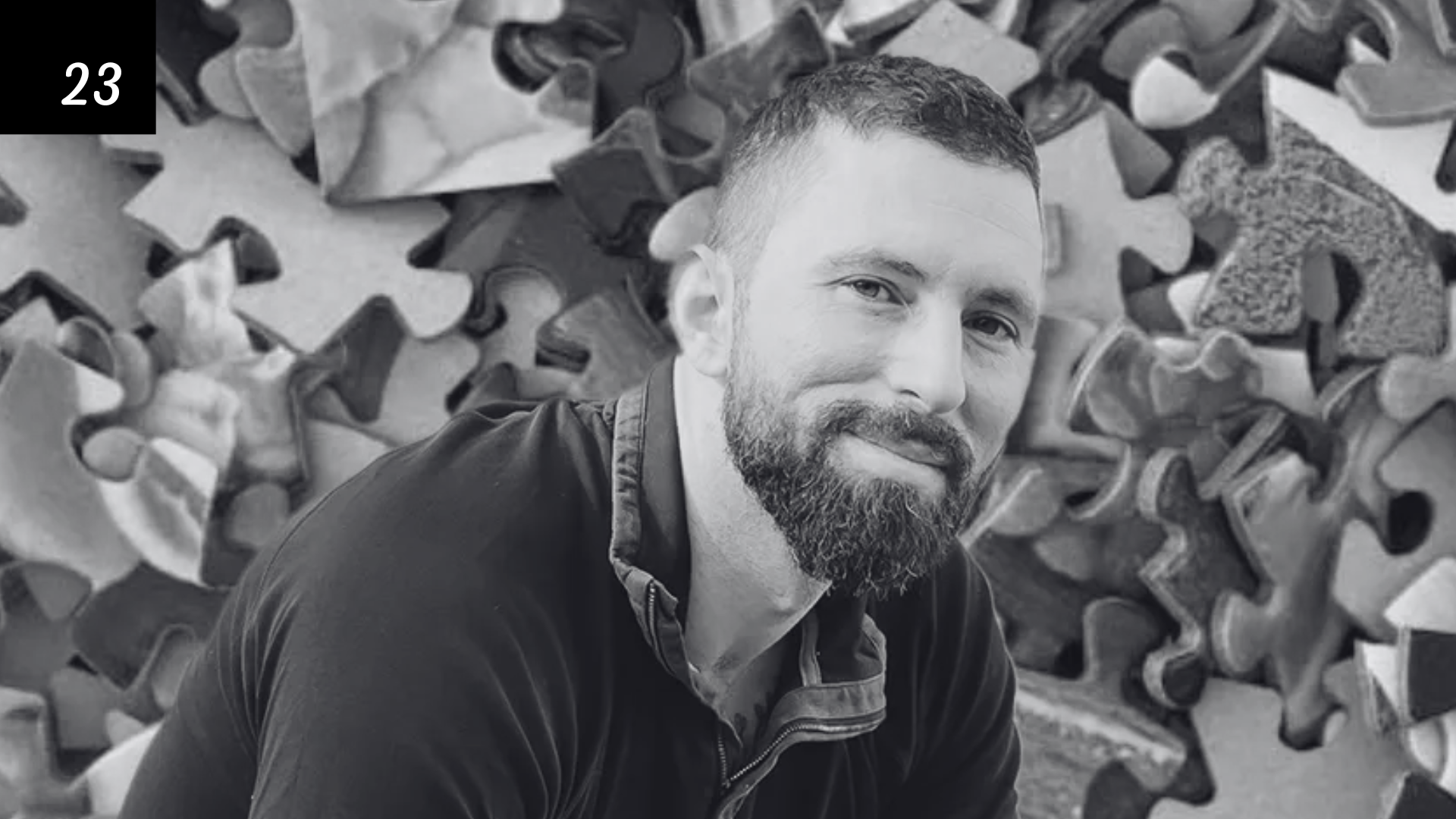
How technology, predictability, and the courage of “not hiding” shape human connection.
Why does genuine connection feel harder than ever, even though we’re more connected than at any point in history? In this conversation, Sarah Melissa Oswald and Alexander Goldman explore the invisible systems that influence our relationships, our sense of belonging, and our ability to stay connected in the modern world.
About This Episode
In this episode of Facets of Connection, Sarah sits down with writer and systems thinker Alexander Goldman to explore the often-invisible forces shaping our relationships. Together, they examine how technology, culture, and modern life quietly influence the ways we connect, avoid discomfort, and seek belonging.
Rather than blaming technology itself, Alexander invites us to become more aware of the systems we’re participating in—and to reclaim our capacity for authentic human connection.
One of the most powerful moments of the conversation comes when Alexander offers a simple but profound reframe: instead of striving to be more vulnerable, what if our work is simply to practice not hiding?
Whether you’re navigating friendships, romantic relationships, family life, or your own relationship with technology, this conversation offers a hopeful and deeply practical perspective on what it means to stay human in an increasingly digital world.
Listen or Watch
Key Topics Discussed
Why connection has become more difficult in modern life
How technology changes the way we relate to one another
The hidden influence of systems on our relationships
Why predictability often feels safer than genuine connection
Rethinking vulnerability as the practice of not hiding
Building friendships as adults
AI, social media, and the future of human connection
Small practices that help us reconnect with ourselves and others
Questions for Reflection
Where in your own life have you chosen predictability over genuine connection?
What might become possible if, instead of trying to be more vulnerable, you simply practiced not hiding?
Why This Conversation Matters
This conversation explores one of the central ideas behind my work: relationships aren’t problems to solve—they’re living systems to understand. Whether we’re talking about marriages, families, organizations, or communities, many of our greatest challenges emerge not from individual people, but from the invisible patterns we’re participating in. Throughout this conversation, Alexander Goldman helps illuminate those hidden dynamics and offers a richer way of understanding human connection.
If these ideas resonate with you, you’ll find them woven throughout my relationship coaching practice. I work with individuals and couples to better understand the patterns shaping their relationships so they can move beyond recurring cycles and create more connected, resilient partnerships.
Resources for Further Exploration
Substack
The Interface of Us (Alexander’s Substack)
Books
The Status Game: On Human Life and How to Play It — Will Storr
The Anxious Generation — Jonathan Haidt
Social Health: The Art and Science of Connection — Kasley Killam
The Art of Gathering — Priya Parker
Connect
If this conversation sparked something in you, I’d love to hear your reflections.
📧 sarah@facetsofconnection.com
🌐 www.leadyourlovelife.com
Follow Facets of Connection wherever you listen to podcasts.
-
Transcript of Episode 23 of Facets of Connection featuring Alexander Goldman discussing social health, loneliness, technology, vulnerability, game theory, AI, belonging, and the future of human connection.
This is Facets of Connection, a podcast exploring how we build relationships that actually work in an evolving world. I’m your host, Sarah Melissa Oswald, relationship coach and founder of Lead Your Love Life.
Each episode explores the many dimensions of human connection—from romantic partnerships and family systems to leadership, community, and the inner relationship we have with ourselves. Through thoughtful conversations with fascinating guests and occasional deep dives into the skills that help relationships thrive, we’ll explore what it takes to build connections rooted in dignity, respect, repair, and resilience. Because the quality of our relationships shapes the quality of our lives—and the future we’re building together.
Today I’m joined by Alexander Goldman, a writer, researcher, and systems thinker whose work sits at the intersection of social health, technology, behavioral science, and, of course, human connection. Through his writing at The Interface of Us, Alexander explores how the invisible systems around us—from our digital environments to our cultural norms—shape the way we relate to ourselves and one another.
In the conversation that follows, we explore why genuine connection can feel so elusive in our modern world, how our brains have adapted to environments they were never designed for, and why the answer isn’t simply to use less technology, but to become more intentional about the systems we’re participating in.
One of my favorite moments in this conversation is when Alexander offers a reframe of vulnerability. Rather than asking us to be more vulnerable, he invites us to simply practice not hiding. I find this distinction both practical and deeply hopeful. Whether you’ve been thinking about your own relationships, the impact of technology on your life, or simply what it means to belong in today’s world, I think you’re going to find this conversation both challenging and encouraging.
And so, with that, here we go.
Conversation
Sarah: Welcome Alexander! You found this podcast and said, “This aligns with my work.” I’ve also read on your Substack that your personal mission is to bring more people back to a place of high social health. I’m curious if you could say more about that—and why this podcast felt like such a good fit for what you’re passionate about these days.
Alexander: It’s been a little while since I listened to your episodes, but I remember really resonating with them. I felt like you held both the ground-level, lived psychological experience of people navigating connection and the higher-level systems that shape those experiences. That really resonated with me.
My background is in game design and game theory, so I tend to think about social systems and human connection from a 10,000-foot perspective. What are the games we have to play to get by? What are the systems we interact with? How do those systems change the way we interact with each other?
I’m actually a fairly touchy-feely person, but when I first discovered this field, it literally kept me up at night when I realized how many people were feeling disconnected and lonely. I thought, If this resonates with me this deeply, then it’s something I should devote much more of my life to.
Sarah: Why do you think that is? Why this, of all things?
Alexander: A few reasons. First, it’s an invisible problem—even to the people experiencing it.
Now that I’ve learned more about evolutionary psychology, I can explain why. If you were lonely and separated from your tribe while wandering through the jungle, becoming overwhelmed by your loneliness would actually make it harder to reconnect with your tribe. So when we’re in distress, we’re often less aware of both the distress itself and the impact it has on our bodies.
Before I understood that, though, it was simply knowing how many people were out there craving connection, belonging, friendships, relationships—feeling completely alone in that journey, believing something was wrong with them because they didn’t have what they longed for. I found that heartbreaking.
Sarah: This may be too personal, but was that something you struggled with yourself? Were you looking for a personal answer, or has your interest always been more at the systems level?
Alexander: I think it’s important for people to understand why this became such a personal calling. I’ve moved many times throughout my life. I’m a very extroverted person, so in adulthood I’ve generally found it easier to make connections.
But it’s still hard. I’ve had to push against my own instincts and our natural desire not to ruffle feathers. There were definitely periods—especially my first couple of years in college—when I didn’t have the skills I have now. I certainly experienced a great deal of disconnection.
Sarah: I think almost everyone can relate to that, even if it looks different from person to person. Even as someone who’s studied this for years, there are still days when I have to tell myself, I need to get up and go see people. Sometimes that feels like work, even though I know that’s where I get my energy. It can still be challenging to know where to begin finding meaningful connection.
Alexander: It’s so true. The science behind all of this is really mind-blowing.
We have our evolved mammalian brain sitting on top of our older brainstem—the lizard brain. That older part of the brain says, Avoid risk at all costs. Social risk feels deeply existential. Meanwhile, our evolved primate brain is saying, I desperately need connection.
So we have these two forces wrestling inside us. If you’re not aware of that, you might think something is wrong with you because you’re getting ready to go to a party and, at the last minute, think, I don’t really want to go. But there’s nothing more human than that tension.
Sarah: I completely agree. You mentioned your background in game design, and when we first talked you told me about the dating app you were building. I’m curious if you’d share more about that journey—and how studying game design eventually led you to realize you didn’t want to spend your life distracting people. That’s quite a career shift.
Alexander: It is. I’ve made a number of career shifts, so this was just one stop on a very zigzag path.
I’ve always loved art and creativity, and I genuinely thought I wanted to spend my life making games because they allowed creativity to reach people at scale. There are a lot of redeeming qualities to games, so I don’t want to sound dismissive or holier-than-thou.
But while I was in graduate school for game design, I realized many people derive their sense of meaning, accomplishment, identity, and self-worth from the games they play. You accomplish things in games that give you a sense of purpose and joy. Eventually I realized many people were getting almost all of their identity through games. That felt dystopian to me once I recognized how rich reality actually is—and how many opportunities there are for messy human connection.
Sarah: Moving from gaming into real life—and embracing being a messy human—takes courage.
Alexander: I love messiness. I’m visiting family right now, so the room I’m staying in isn’t especially messy, but I think messiness itself is beautiful.
I remember one of my first relationships. The woman I was dating had a scar—not a significant one—but I remember suddenly realizing, This person has lived an entire life. She’s just a person. I’m just a person. We’re these messy little primates wearing clothes and stumbling through life together.
That realization was incredibly freeing. I no longer felt like I had to become this perfect person or present some flawless image of myself. We’re just little people. There’s so much liberation in that.
Sarah: I love that. I think many people experience the opposite—they see the mess as something to escape.
But human beings are far more complex than the predictability of a video game, or really any virtual environment. When we spoke before, you said predictability feels safer to the nervous system than genuine human contact because people are unpredictable. They’re messy. They’re complex.
Alexander: Exactly. Our brains are essentially prediction machines. They’re constantly trying to forecast outcomes. Human beings are one of the greatest sources of unpredictability.
If you’re in a relationship, you don’t know whether your partner will leave you, break a foot, or surprise you in some other way. Part of the brain constantly seeks predictability and control. I compare it to trying to breathe through a straw while underwater.
You’re meeting some fundamental needs for safety and control, but you’re also cutting yourself off from the fully lived reality that you actually want. To truly live, you have to come up for air. You can never be fully happy if you’re only interacting with AI, only playing games, or never seeing people in person. We need unpredictability.
Sarah: Do you think our use of technology is one of the drivers behind today’s epidemic of loneliness, isolation, and disconnection?
Alexander: Fundamentally, yes. I’ve spent a lot of time studying the founding stories behind social media companies and consumer technology.
One fascinating example is Tinder. The engineers who created it originally described wanting a way to connect with women because they were too afraid to approach them in person. Instead of building something that helped people become more confident in real life, they built a system that prioritized control and predictability. That philosophy became embedded in the product.
The result is that today, 45% of men between 18 and 25 have never asked a woman out in person. The tools we use subtly teach us how to see the world.
Another example is Instagram. The founder’s girlfriend didn’t want to post photos on Facebook because she disliked how she looked, so they built photo filters. That became Instagram’s original value proposition.
The unintended consequence is a platform that has contributed to enormous pressure on young women to carefully control their image. When technology feeds our underlying fears instead of our healthier instincts, we create tools that promise to make us feel better while actually making us feel worse. They’re ultimately counterproductive.
Sarah: Our real selves begin to feel worse while our online selves become more beautiful.
So I’m hearing you say that technology has fundamentally changed our relationship with uncertainty, discomfort, and intimacy. Do you think we’re losing our capacity to tolerate the awkwardness that’s necessary for genuine connection?
Alexander: That’s a great question. I think there are two parts: our own individual tolerance for discomfort and the social norms we’ve collectively created.
For example, because our phones offer constant distraction, you might see someone wearing an interesting hat and think, I’d love to ask where they got it. But then another thought appears: I’m not supposed to do that. Everyone stays in their own bubble.
Those social expectations reinforce the idea that discomfort should be avoided. At the same time, everything we do reshapes our brain. What fires together wires together. The less we practice discomfort, the scarier discomfort becomes.
So many people know they want more serendipity in their lives, but pursuing it feels intimidating. Especially for older generations, it can be difficult to appreciate just how frightening those social risks feel for younger people.
Sarah: I’m right in the middle of that generational divide. I’m almost forty-three, so I’m one of the last generations that remembers life before smartphones.
I’ve been bringing people together in community for about fifteen years, and I’ve noticed a real shift. People seem much less willing to walk into a room full of strangers and share vulnerable parts of themselves.
I’ve been asking myself how we make that feel safe again, because I believe belonging is essential—not just for healing, but for facing the challenges ahead. How do we help people show up? Ten years ago it wasn’t nearly this difficult.
Alexander: I think part of it is that people don’t realize we should actually fall in love with discomfort. Discomfort is gooey and weird.
But if you interact with people only online, you really become an isolated individual. When we’re that disconnected, our nervous system changes. Threat perception increases. The level of trust we have in strangers goes down. We begin to feel completely alone in the world, and therefore we trust others less.
So the work is about cultivating the conditions that help people feel safe enough to trust—and helping them question the narratives they’ve inherited about themselves and everyone else. There’s a lot to it. It ain’t easy, sister.
Sarah: I’ve just been wondering what it is that people would want out of that, and my sense is that a sense of belonging is essential to our well-being. But if we don’t recognize discomfort as something that’s maybe good for us, how would we ever get there?
Alexander: I think it’s interesting, too, because so much of the underlying technology was premised on the idea that discomfort is fundamentally bad—that the more you control your life, the better you are.
Even though that messaging isn’t right there out in the open, it’s implicit between the lines. If you see ads for social media or Uber Eats or anything like that, it’s about: How do you control your life the most? How do you access information?
Whereas being part of a group is different. There’s something amazing that happens when you’re part of a group and you can look around and say, I trust these people enough. I don’t need to show up in any particular way. I can just be me. I don’t have to curate myself or control myself.
And fundamentally, if you don’t have that, your cortisol goes up. Elevated cortisol is toxic to your prefrontal cortex. There are incredibly real health issues here. So it’s not just a lifestyle thing. It’s fundamentally a health thing, too.
Sarah: I agree with you. That’s why the Surgeon General of the United States named it an epidemic.
Alexander: Right.
Sarah: It impacts our health on all levels.
What I really like about you, Alexander, is that you’re a systems thinker, like me. But I’m very much in the day-to-day, on the ground with people, figuring out what’s happening here and now, and you’re more zoomed out than I am these days. You’ve got this bird’s-eye view of the system playing out before us that we’re all trapped inside.
You said to me earlier that the systems are characters in this play we’re in, and these systems have more lines than we do as human beings. Can you speak to that? Do you remember saying that to me?
Alexander: I do. Yeah.
My background is in game design and game theory. One of the interesting things in game theory is to imagine you have a group of people and a set of rules. How do people behave in that environment, where there are specific things they’re trying to accomplish and specific ways to accomplish them?
Sometimes the rules of the game are so repressive that they define people’s behavior and interactions much more than individuals do.
For instance, I think about young girls on social media. Our brains are hardwired to seek status, connection, approval, and all of these things. There might always have been some high school cafeteria jockeying, but in general, you had your group of friends, you reinforced those bonds regularly, and that’s where you got your sense of connection.
With social media, there’s pressure to provide content, curate your image, cultivate an identity, and be constantly online, because otherwise you lose access and the opportunity to position yourself as higher status. So there are all these girls who essentially feel like they have to play this game.
I recently read a statistic that 44% of teenagers wish social media had never been invented.
Sarah: Yeah, me too.
Alexander: It’s staggering, because a lot of the ones who use social media the most are the ones who wish it had never been invented. If nobody had access to social media, they wouldn’t have to keep putting in this work.
Sarah: They feel trapped by it.
Alexander: Exactly. They feel trapped by it. It’s essentially a game they’re forced to play. And if you vanish from it—
Sarah: Game of their lives.
Alexander: Yeah, exactly. If they vanish from it, they lose their social status. They lose their positioning.
When I moved to Austin, I was talking to a friend, and he said that if you want to date, you have to have a really developed Instagram profile so that if you meet women, you can share your profile and they can see who you are before they decide whether they want to go out with you.
I was like, “I’m not doing that.” But I could easily have felt like I had to because those were the rules of the game.
Sarah: I suppose you could. You could feel that way.
Alexander: Yeah. Many people probably do. And if I did do that—I’m in a relationship now—but it probably would’ve been much easier to find one, because that’s where my credentials would’ve been, basically.
Sarah: Mm-hmm.
As you were telling me this story about high schoolers in the cafeteria, I imagined myself in high school and pictured my group of friends around me. That group gave me a sense of safety moment by moment. Without that, if all interactions are on social media, you don’t have that same sense of safety with your people. You’re on your own out there.
Alexander: I think that’s fascinating. We think it’s so obvious that we each have our own profile on social media. That seems intuitive, right? But that also has a built-in philosophy that it’s just us, and the world is its own thing.
When I was growing up and I would get together with a group of friends, I wouldn’t be thinking, What’s the story of my life that I want to tell in this encounter? I wouldn’t be thinking about how I was going to post it to social media. It was just me belonging with friends, playing games, going out, or going to a party. You’re not hyper-fixated on your own identity.
That’s another thing social media does: it reinforces the parts of our brain that fixate on ourselves. We become much more anxious about our own identity, our own interests, and our own safety. And if you’re only focused on your own safety, you can’t help other people feel safe. That’s what we really need.
The more we focus on other people’s safety, the safer we feel. If you’re only focused on yourself, you’re never going to feel safe. Nobody’s ever going to feel safe.
Sarah: Okay. Great. I mean, I’m with you. It’s a very sad picture that you’re painting, and I see it.
So here’s the question then: How do we become more conscious participants rather than passive recipients of social media—whether it’s on social media or just out in the world?
Alexander: I compare it to sugar. We all know sugar is okay for you in limited quantities, but nobody says, “My entire diet is sugar.” Whereas a lot of young women spend five and a half hours a day on social media.
The first thing is that we know our desire for sugar is biological. We need some kind of self-concept where we recognize that our desire for stimulation, novelty, and social media is also biological, and we should stop thinking about that as us.
If you compulsively pick up your phone—which we all do many times a day—you shouldn’t think, “Oh, I picked up my phone for a reason. Let me scroll on Instagram because I must have picked it up for a reason.” No. We can simply be aware that some parts of our brain go on autopilot sometimes.
Then it’s about taking little opportunities every day to reflect on our values and how to live them out, and making small decisions every day. Find out how much time you spend on your phone and see if you can cut it down by five or ten minutes a day, or a week, or anything. Just start exerting control and agency over your own life.
Sarah: So are you saying that we shouldn’t identify with that automatic part of our brain that reaches for the phone—or even knows how to find Instagram with my finger? My finger knows how to do that without my brain saying, “Oh, you should check Instagram,” right?
Alexander: Totally.
Sarah: My finger knows it. So are you saying we shouldn’t identify with that part of our brain? That’s not us?
Alexander: What’s fascinating is the part of our brain that feels loneliness. There’s a lot going on in the brain when you feel lonely, but it’s much more akin to a sensation like hunger or thirst than it is to an emotion, because there are physiological things happening in your body. It’s not just an emotion.
Sarah: It’s a cue.
Alexander: It’s a cue, yeah. If we feel hungry, we don’t think, “There’s something about my essence that’s hungry. My inner self is hungry.” No. It’s just a body thing. The same is true when you feel compelled to pick up your phone. It’s just an impulse.
Sarah: So from that framework, loneliness and the cues of it in our body are an impulse for finding our people.
Alexander: Yeah. When you feel lonely, your brain perceives it as unsafeness.
Sarah: That’s right. You fundamentally cannot feel lonely and safe at the same time. You cannot be outside the tribe and still be safe.
Alexander: Correct. Those are old parts of our brain that you referenced earlier.
Sarah: Yeah. Just part of our biology. People have that biological response to loneliness: “I feel that lonely thing. Let me go on Instagram and see some people I know.” How is that not serving me? How is that not the way I need to get this itch scratched?
Alexander: In so many different ways. First of all—
Sarah: I know. I’m just asking you what you have to say about it. We might have different answers.
Alexander: Yeah. What’s really interesting is that our brain responds to different kinds of social media content in different ways. The easiest way to divide it up is between active social media use and passive social media use.
If you’re commenting on friends’ photos and sharing something because you genuinely want your friends to know what’s going on—not because you’re trying to be seen in a particular way—that doesn’t have as great a negative impact on our mental health and feelings of connection. In limited quantities, it’s okay.
But the best metaphor is this: imagine you went to a mailbox, put a photo of yourself in it, wrote a description, and then someone else came, took out that photo, and wrote a response. Now compare that with spending time in person with friends. Which one is a social experience?
Obviously, the mailbox thing is weird. That’s about control, disconnection, curation, and isolation.
But passive social media consumption—where you’re viewing the content of people you don’t know—is really bad for your brain in different ways. Any time your brain experiences that novelty, any time your brain releases dopamine, it also releases cortisol. Cortisol takes longer to hit your system because it works through the endocrine system rather than directly within the brain. So it can take twenty minutes to hit your system.
You’re scrolling, experiencing that novelty, and if someone likes or comments on your photo, you get some oxytocin. But fundamentally, it’s just bad for your brain. You get this buildup of cortisol, whereas when you spend time in person with people, your cortisol levels go down.
So you could just look at it as different hormones and chemicals in your body. If we measured those things, the difference between being on social media and actually spending time with people would be night and day.
Sarah: So that would be one of your recommendations—to become an active participant in our system rather than a passive recipient?
Alexander: Yeah. It’s weird, even the language: followers, things like that. I don’t know how we normalized the idea that being a follower in life makes sense, or sitting in the stands watching other people live their lives makes sense.
There’s that Roosevelt quote, The Man in the Arena. I’m pretty sure that’s Roosevelt. I’m grossly paraphrasing here, but who are the people in the crowd to critique the people in the arena who are actually competing and living their lives?
Sarah: It’s okay.
Alexander: Live your life. That’s the simplest way to put it. Seek out risk and uncertainty. Live a messy life. Obviously, don’t be attached to outcomes if you’re interacting with someone.
And I think this is the beautiful part: our brains are addicted to structure. We crave structure and predictability. It makes so much sense that what we need to counter our world, where there’s way too much structure, is to live in a world with less structure.
But our brains are like, “I’m not super comfortable with that.”
Sarah: Right. Who in their right mind would seek that out?
Alexander: Right. But that’s what it used to mean to be cool, right? Being cool used to mean going to parties, and now it means separating yourself. To me, it’s obvious. Be cool. Hang out with people. Do people things.
Sarah: Did the definition of cool really change? I didn’t know. I’m still doing the old version of cool.
I know you’ve been focused so much on the bigger picture—the systems at play—and right now you’re speaking to the very human element of how to make your life more connected. But what’s the bigger system that brought you to this conversation? Why the heck did you find yourself here, Alexander?
You were making video games, and even your creation of a dating app seemed like it could have been enough to pursue the questions you were holding. But what was it inside you that said, “I need to understand this better. I need to look at it from a bigger perspective and write articles about it and do interviews”? What are you up to?
I know what I’m up to. I love working with humans. They’re in my office every day. I’m making a tangible difference in their real lives. That lights me up. I am on the planet for that reason. I am on the planet to help people know more about themselves through meaningful connection with others.
But I realize I’m making assumptions about you. I don’t know enough about you to understand how you got here.
Alexander: No, I think it’s a great question. It’s really not that different for me in the sense that I’ve always found people interesting.
I think when you work at the systems level or you’re trying to understand things, it can feel very disconnected. But I have these end goals. My end goal is to help everyone feel more connection and live a more satisfying life—to have more life in your life.
I hope to accomplish that by cultivating conversations and sharing research. I have a podcast where I talk to experts to learn more. Eventually, I want to do another startup in this space that attempts to leverage everything I’ve learned to build alternative paths to status and connection, particularly for young people.
Honestly, when I learned about the loneliness epidemic, I thought, “This is such a freaking dumb problem.” We all want more connection. It’s not like there’s a limited amount of food where some people are always going to be hungry. Theoretically, everyone can have the connection they want.
Frankly, dumb problems tend to be really complicated—problems that don’t need to exist, but are still incredibly complicated. That’s the way my brain thinks. I like thinking about the systems and the people.
And honestly, I had never really understood what people meant when they talked about having a driving sense of purpose that pushed them in a particular direction. In the past, when people said that, I was always kind of like, “Okay, it matters to you, but what does this mean—purpose?”
Then when I stumbled across this work, I was like, “No. I would devote my life to this.” And I want to devote my life to this.
I’ve been a camp counselor. I love working with kids. What really got me was learning how miserable the generation I used to work with as a camp counselor has become—statistically far unhappier than previous generations at that age. I was like, “Screw that. I have a set of skills. I want to contribute.”
I also think I bring a unique perspective. I like thinking about game theory and behavioral economics, and I think there are perspectives missing from the human connection space. There’s a lot of sociology and psychology, which are incredibly important and valid. But if we don’t nail the branding and understand how to transition this into action, then I think it becomes a bit like the language around climate change.
When climate change became a major issue, it resonated with a lot of people and drove action. But for others, the language felt threatening or didactic or disconnected from their day-to-day life, and that created a rift.
I think we have an opportunity to nail this, and I hope to be part of that. Sorry, I feel like I went on for a while.
Sarah: That’s great. It tells me a few things about you. For one, I think we have a lot more in common than I initially realized. Two, I want to be part of building whatever the heck you’re up to. And I love that you’re thinking about this from a business lens.
How do we nail the branding for this new world order of connection that we need in order to survive as a human species? We’ve got to get the branding right, or else we’re going to lose this whole new generation of people.
Alexander: It makes so much sense, right? There’s a push to transition from talking about loneliness to talking about social health. That makes a ton of sense.
Our brains are hardwired to fear loneliness and to fear being seen as lonely. So talking about the loneliness epidemic can actually be counterproductive in some ways, because increasing awareness can lead people to crystallize a view where they think, “I don’t want to talk about that.”
If you’re already in the know and you’re like, “Yeah, let’s talk about the loneliness epidemic,” then you know what we’re talking about. But other people are deathly afraid of being seen as not having enough social connection in their lives.
So it is fundamentally a branding problem. How do you reframe it so that pursuing connection and taking social risks are seen as high status and desirable instead of signs of weakness or neediness?
Sarah: I love that.
Alexander: Confidence has always been sexy and interesting. Somewhere along the way, we lost the message.
When you uncouple things that should be intertwined in the human experience—confidence, status, risk-taking, extroversion, all of these things—social order starts to fray.
Sarah: I was thinking again about that teenager in the cafeteria. It would be death to sit alone at a cafeteria table by yourself eating lunch. You don’t admit that you don’t have friends. That’s shooting yourself in the foot. There’s a real stigma around being lonely.
Alexander: Yeah. And we need more spaces where we actually live in the same world together.
There’s more to unpack there, but just being in the same place and realizing how much we have in common matters. I just wrote a piece—subtle plug for my Substack—about how I’ve learned so much more in my life by realizing what I have in common with other people than by focusing on what sets me apart.
You can’t understand yourself only by seeing what makes you different from other people. When you realize that we all just want to feel like we belong in the cafeteria of life, that changes things.
A lot of people eat every meal alone. I think it’s something like half of all Americans in a given week—maybe half of all adults. It’s a staggering number.
And if you can afford not to be seen, then you don’t risk being seen as lonely. So that’s something else we need to address.
I firmly believe we should be talking about not hiding and how easy it is to hide in our lives.
Sarah: Yeah. I was going to bring that up next, actually. It feels like it segues really nicely into that.
Sarah: You’ve spoken about the difference between the word vulnerability and not hiding. You don’t like the word vulnerability.
Alexander: Yeah. I think I like the idea behind it, but fundamentally, a vulnerability is a weakness, right? It is, definitionally, a weakness. And the framing of being vulnerable is, “Okay, let me be weak with you.”
We’re hardwired not to want to seem weak. We don’t want to be weak; we want to be strong. So there’s a part of our brain that hears the concept of being vulnerable and says, “Oh, God, no. I don’t want that. I don’t want to be seen as weak.”
And this is where the game theory comes in—the social rules and reprogramming those rules—because the framing I like is not hiding.
We all experience emotions, and emotions fundamentally connect our inner values and our lived experience and tell us how to act. If you’re angry about something, that anger is driving you toward action.
For me, it’s just not hiding. Showing up, letting yourself be seen. You don’t have to cry at a movie if you’re a manly man, right? It just means that if you see a puppy abandoned on the side of the road and you feel sad, that sadness isn’t weakness. That sadness is strength because it’s driving you toward action—to take that puppy, bring it to the pound, figure out whose puppy it is.
If you let yourself get bowled over by emotions, that can be a form of weakness. But just showing up and being in touch with yourself—that’s essential to being an effective person.
Sarah: That’s right. That’s a form of strength—to be in touch with oneself. That takes a lot of courage and strength, to know what’s happening inside oneself.
Alexander: Yeah. As opposed to fear in your inner world.
Sarah: Yeah, for sure. It’s much easier to stay in fear, maybe. But how might we rethink strength in a culture that often equates emotional openness with weakness? How do we redefine that?
Alexander: I think it’s little things, really. The whole manosphere thing is fascinating because it goes back to that idea that when people are stressed, they need to understand the world more. They need more rules and structure and predictability. There need to be strict explanations for things: Whose fault is it? All of these things.
That’s what social media does to us. It makes us feel like we need more structure. So part of it is helping people, one-on-one, feel like they can step back from that world.
I also think there’s a lot of reprogramming we have to do. There’s so much that has to happen in education—teaching people these skills at a younger age and framing them as fundamental literacy. You need to understand your inner world because that drives you to live the life that makes sense.
And I do think there’s a lot of messaging we need to do. Public service announcements are really interesting because, in many ways, they can drive action.
I’ve been studying marketing and advertising recently, and what’s fascinating is that the most effective advertising uses indirect messaging rather than direct messaging. If you see an ad for a cruise ship, the ad doesn’t say, “You’re sad and miserable. You need a cruise.” It says, “You’ve worked hard. You deserve a cruise.”
I think we need to employ a lot more indirect messaging to reframe masculinity in the right ways and help people feel confident and comfortable in that world. Hollywood can help with that, but I think it’s everywhere. I’m an older brother, so modeling that for my younger brother matters. If I were a parent, modeling that for my kids would matter. All of that is important.
Sarah: What would be the indirect marketing message you would give to our population?
Alexander: I think I would craft a message where the only conclusion you could draw is that hiding your emotions is a sign of weakness. Maybe there’s a character who’s kind of laughable because they seem to need to control their world too much. I’m just riffing right now.
Sarah: That’s okay.
Alexander: But I’ve actually thought about a campaign where you see someone reaching out and making friends. Having friends has always been high status, but the process of making friends has lost its acceptability.
So maybe you show celebrities meeting other celebrities and just talking to them, saying, “Hey, you wanna hang out sometime?” Taking those risks, talking about things they have in common. They’re not gushing about their emotions. They’re just saying, “I really like this. I like that. Why don’t we do this sometime?”
I remember reading qualitative interviews with young men about loneliness, and one quote stood out to me. I’m paraphrasing, but essentially he was saying, “What? Am I supposed to just talk to a dude and be like, ‘Hey, you wanna hang out?’”
And, like, duh. That’s how you make friends. So we need to normalize that by showing that these things are high status.
Sarah: Wow. It’s just not even known anymore how to do it. My status is average. People used to just ask if they wanted to hang out.
Alexander: Yeah.
Sarah: Whew. Status is average.
You know what I’ve been doing?
Alexander: What?
Sarah: I’ve just been going out of my way to tell new friends, “Hey, I really like you. I want to be your friend.” More often than not, the person says, “Wow, thanks. It’s very rare that people actually say that, and it makes me want to be your friend too.”
Alexander: Yeah. “Thanks for naming it.”
And that’s also a demonstration of strength, right? You’re confident enough in your life, your status, or whatever you want to call it to say, “I’m not afraid of being seen a certain way.”
I love giving dudes compliments because a lot of dudes never get compliments. I’ll be at a coffee shop and say, “Dude, that’s a cool shirt,” and often guys are like, “Wow, thank you.”
I like giving anyone compliments. If you’re a guy, giving a woman a compliment can sometimes be complicated because she might wonder, “Is this the opening for flirting?” And I’m a huge fan of flirting, but if I’m just trying to give someone a compliment, I often prefer giving compliments to guys when I have no ulterior motive.
Sarah: Feels a little safer.
Alexander: Yeah. For me, it’s not even that I’m worried about safety so much as I want the person to know that I’m giving the compliment because I genuinely think what they’re doing or wearing is cool.
I love complimenting guys’ beards and mustaches. “Dude, badass beard.” It’s awesome because everyone loves getting compliments.
Sarah: That’s such a simple way to influence the culture of this. Just making a simple comment to a stranger: “I like your sunglasses.” Seeing one another.
Alexander: Right. And living in that same world.
Because that’s the other thing. This might be a bit indirect, but I read this interesting article that was basically asking: We know in physics there are tons of dimensions, right? We’re not limited to three dimensions. So why did life evolve in three dimensions?
At two dimensions, there’s not enough complexity. Everything would be flat and the world would be too simple. But at four dimensions, there’s so much more space that you might never see anyone. If I existed here, you might exist somewhere else in the future at a different point in time, and it would be too hard to connect.
That’s kind of the world we live in right now. There are way too many different spaces. So just showing up, giving someone a compliment, and existing in the same space—our nervous system responds to that. We’re like, “Oh my God, yeah. We’re here.”
Sarah: The collective spaces.
Alexander: Yeah. Physical spaces where people can gather.
Sarah: Physical spaces. That’s important to the future of humanity.
And you also said earlier that social media has this assumption that we should all have our own personal accounts. That got me thinking: What would a collective account look like? How could collective accounts interact with one another? Would they?
Alexander: Right. It’s interesting.
Imagine, for example, that you’re with a group of friends doing a potluck. Everyone brings something, so you know the end result of this system comes from the actions of individuals. But once all the food is on the table, you don’t necessarily know who brought what.
The point is the end result and the sum of the parts. It’s not about the individual contributions.
I used to be in Cub Scouts when I was young. You wouldn’t go to a Cub Scouts potluck and have everyone put their names on the food: “Look at what I did.” You do something for the public good.
Maybe a digital representation of that is harder, although there are versions of it where you can contribute without leaving your name. But in person, I think that’s easier.
And it’s beautiful, too. Doing something and not needing to be seen for doing it is a great gift.
Sarah: True. Do you think AI is going to change that for us? We don’t know what the future looks like right now. We know it’s going to be a very different world from the one I grew up in.
Sarah: I don’t know how old you are.
Alexander: I’m 37.
Sarah: Pretty close. I’m also pretty stoked on some of the AI stuff. I use it a lot. I think there’s a lot of power in it, and there’s a lot of potential for humanity to see itself through the lens of AI. What are your biggest excitements around it, and what concerns you the most?
Alexander: My biggest excitement is that I do think there’s an opportunity to use AI to build tools that help transition people back into connection, or away from disconnection.
For instance, there are a lot of tools you can use on your phone to limit access to apps. There’s a whole host of reasons why they don’t work—I’ve tried them.
Sarah: Yeah. Didn’t work.
Alexander: But if you know what your priorities are and what your values are, you could use an AI tool so that when you try to open Instagram or something like that, it pops up and says, “Hey, remind me what your values and priorities are.”
A lot of our agentive, higher self, you could say, isn’t really active all the time. So I think there are ways to engage that sense of self and remind us of our priorities when we interact with technology.
I also think AI has the opportunity to help people build and practice skills.
I’m definitely worried about the whole AI boyfriend and girlfriend thing, and the idea of having your whole social life through AI.
Sarah: Yeah. It’s wild, isn’t it?
Alexander: It is. At the same time, I take some solace from the fact that the whole reason Meta rebranded as Meta was because they thought the whole world would be in VR and that would become our reality.
Maybe they were just ahead of the game, but there was a lot of pushback. Nobody really wanted that because it’s kind of a loser way to live your life in VR. And I do hope we consciously share the reality that living your life with only virtual friends is kind of a loserly way to live as well.
So I don’t think it’s a foregone conclusion, but I do think it’s an uphill climb.
Sarah: Hmm. Well, I’ve built an AI tool to help people with connection.
Alexander: Right. Exactly.
Sarah: I built a tool based on the models I’ve studied. I don’t know if I told you about this, so stop me if I did.
Alexander: You did.
Sarah: I did.
My clients use it between sessions, and it helps them find contact with self so that, in a stressful moment, they don’t bring a less mature version of themselves to their partner. They can take it to this AI tool and use it to understand what’s coming up for them, get into their bodies, see the bigger pattern, and then deliver a message back to their loved one that’s more aligned and true—and more likely to bring them closer rather than push them away.
Alexander: That’s beautiful. It’s a perfect example.
AI conversational models can help us interact with our own messiness and our lived reality. If you’re a therapist and you see someone for one hour a week, you can’t just learn and grow one hour a week. So I think there are a lot of ways to amplify our capacity to engage with things.
The problem with programming and digital experiences historically is that they’re rules-based, which means you can’t bring your messiness into them and interact with your messiness there. AI tools have more variability. So there’s certainly a lot of power there.
I also think we’re still learning best practices, and it’s up to pioneers like you to figure it out, play with it, get feedback from users, and figure out how to expand our capacity to improve the world through it.
Sarah: Yeah, because it does have the ability to meet us as messy humans in a way that technology never has before. So there’s something possible here. I don’t know exactly what, or where that will lead us.
And I also understand the detriment of having AI here. There are a lot of downsides, but it’s here. It’s not going anywhere. So as a business owner, I’ve embraced it because it’s smart for me to do so personally.
But what responsibilities do we have as we design the next generation of human systems? That’s a big question. What responsibilities?
Alexander: I fundamentally believe that every builder also has to be a philosopher. Everyone is. And if you don’t think that you are, then you’re just a bad philosopher.
You wind up building a Tinder or another dating app that reinforces the very fears you were trying to assuage by building it.
So I think the first fundamental responsibility is that you have to study and really ground your idea—and what you build—in science and in an understanding of how things work.
I think the whole story of modern humanity is that our capacity and the power of our tools constantly outstrip our intelligence and wisdom. We can build really damaging things.
There are people building AI girlfriends and AI boyfriends. That’s a perfect example of someone having way more capacity than wisdom. They’re just bad philosophers.
The second part is to actually play out the thing you’re making, which means doing research with users. I’m professionally a user researcher. That’s what I spend all day doing and thinking about.
You have to actually figure out how what you’re building is going to impact people, try to anticipate the negative outcomes, and design around them.
It can be expensive because you can make a lot of money doing dumb things. But invariably, I don’t think those systems are fundamentally sustainable.
For instance, there are lawsuits right now where Meta and Google have lost cases over social media being addictive—things like infinite scroll, personalized recommendations, and algorithms.
I do think, in the end, that’s going to hit the market caps of these companies and they’re going to take a step back. I think the long-term business prospects of doing things the right way are better.
Sarah: Always. That’s not really where we are as a culture right now, though.
Alexander: No.
At one point I worked as a professional futurist at a think tank, trying to understand how emerging technology would impact us. We need far more of that. We need louder voices, stronger voices, and experts who can help establish a culture around new technologies as they emerge.
For instance, early AI models were particularly sycophantic, and many still are, because people like being complimented. But it’s not good for us, and that should have been front and center much earlier—putting pressure on these AI companies to make the models less sycophantic.
They are less sycophantic now, but they’re still very complimentary.
Sarah: They sure are. I have to remind mine to be truthful with me.
Alexander: That’s a great point, Sarah.
Sarah: I do remind it, because sometimes it will make stuff up, and I’m like, “Wait. That’s not fully true. Do not give me answers that are just made up to make me feel good.”
Alexander: Right.
We’ve spoken about some immediate action steps for people. I’d like to talk about what you can do if you’re a parent—or different kinds of users, or people, as humans might call them.
I think, in particular, if you’re a parent, it’s never been harder to be a parent. It’s so easy to give your kid a device, and I really do think that in the future we’ll have people whose brains developed without spending too much time on devices and people whose brains are underdeveloped.
Most people think social media is about novelty. I actually think it’s more about a feeling of control and predictability. That goes back to what we were talking about earlier: just because your brain likes something doesn’t mean you have to identify with it.
I liken scrolling on social media to compulsively checking security cameras outside your house. You think, “Uh-oh, something might be going on,” so you scroll through the cameras. You feel safer after dismissing the potential risk, but the net result is that you feel more at risk because you’ve reinforced the belief that you need to keep monitoring these threats.
A great example is the movement toward phone-free spaces on campuses, thanks in part to The Anxious Generation.
That’s great, but those kinds of things have to be premised on values that are connected to status. If the message is, “We young people can’t control ourselves, therefore we need phone-free spaces,” that’s never going to take hold because nobody wants to feel like they can’t control their behavior.
Sarah: So it has to be linked to status.
Alexander: Everything has to be linked to status, because people want to feel good about themselves. Behavior change is always linked to that.
Alexander: I compare it to smoking. In the early ’50s, more than half of all Americans smoked. What changed—and why it dropped to, I think, around 13 or 14%—was two things. One was the research on the health impacts, but that alone didn’t drive the change. Smoking used to be seen as classy, and then it became seen as trashy. When behaviors shift their social weight, patterns change and then behaviors change.
Sarah: Hmm.
Alexander: So if kids start seeing that spending time away from your phone is the high-status thing to do, versus being on your phone as a compulsive need to suck on a digital pacifier, that’s where we actually start seeing movements.
Sarah: That’s good. Yeah. That is so good. I like that. Help them see how lame and trashy it is.
Alexander: I mean, you should be embarrassed if you’re looking at your phone too much. It goes back to this idea that people think they’re connecting with others by scrolling through social media, but obviously that’s not the case.
Think about this: we were talking about how loneliness is stigmatized. What if it were stigmatized to be on your phone too much because it shows the world that you are lonely? Don’t be out in the world holding your phone and looking at Instagram while you’re in public. That’s really embarrassing.
And this is where things go back again to game theory, because how do you put these messages out there? So many people consume information through social media. Are influencers going to tell people not to spend time on social media? No.
That’s the real challenge. You boil it down, you know the right thing to do, the right messages, the right kinds of social engineering we need, and then it becomes a challenge of how to actually make it happen.
I fundamentally think what we’re talking about now is a movement. It’s a social movement. It’s a whole reframing of values. It’s an alternative way of living, an alternative path to status, an alternative way to feel important. That’s really what we need.
Nobody should scoff at people or publicly ridicule them for being on their phone, because that’s kind of a douchey move. But at the same time, you can imagine businesses putting up signs that say, “Don’t suck on your digital pacifier.” That’s a bit hyperbolic, but you know what I mean.
Sarah: I think so.
On the flip side of that, I’m thinking about how to make belonging to a group of people—connecting honestly with one another and with themselves—something that has high status. How do I make that something people can be proud of and brag about?
Alexander: Yeah. I think that’s also a cultural engineering issue, and I think we have some really silly values and philosophies in America.
I’m very pro-American and very pro-90% of what this country does, but the whole idea of going it alone and rugged individualism is interesting. First of all, the phrase “pulling yourself up by your bootstraps” originally meant doing something impossible on your own, because you can’t actually pull yourself up by your bootstraps.
Sarah: That’s right.
Alexander: And we are fundamentally social creatures. So I think about someone who believes they need to go it alone as someone who may actually be too afraid of being human to tolerate the uncertainty and messiness of connecting with others.
Trying to go it alone is actually a sign of weakness. It’s not a sign of strength, because you’re happier and you can accomplish more when you’re in a state of connection.
Those are the messages we need. Again, the path to status—the way people should want to be seen—is as someone who feels a sense of belonging, who goes to the same events again and again.
We also need education around that, because a lot of people fundamentally don’t understand that making friends requires persistent effort. Things like Meetup are interesting because there’s a lot of value there, but a lot of those apps are trying to solve for serendipity: a chance encounter.
I don’t know if you’ve read The Art of Gathering.
Sarah: I’m familiar with it, absolutely.
Alexander: It’s pretty incredible.
Sarah: Amazing.
Alexander: One of the ideas there is that you need closed containers as well. You need to invest in a community. People need to understand that it takes time and repeated encounters to build a real friendship.
So sign up for classes. Improv classes. Become more active in your religious group. I think improv classes are honestly some of the best, although they can be a little silly, so they may not be the right fit for every kind of connection.
But any class, any club, anything that requires membership is much better than a one-off event.
We like to think we can show up once, evaluate a group, and decide whether it’s worth investing in. But you can’t really do that. There’s research suggesting you need to spend around 90 hours with someone to become a true friend—which might be a little high—but the point is that you have to invest.
You can’t just show up and say, “Can we be friends?” It’s trust, effort, and all of these beautiful, messy things.
Sarah: So a membership model where the same people come back month after month and have the chance to deepen in relationship with one another—that’s going to be more successful than a one-off event?
Alexander: Yes. One hundred percent.
At the same time, I think status has been missing from some of those equations. Often people assume that if they go to an event where anyone can show up, they’re just going to meet lonely people. So there can actually be some friction there—a kind of repulsion.
We need to create groups where there’s some level of exclusivity and people feel like it’s worth investing in. Exclusivity doesn’t have to be financial. It can be shared identity, shared belonging, and the sense that you can’t just show up and instantly become a member.
And the funny thing is, I guess this is how cults start, right? Everyone wants to belong to something. You’re like, “Oh, you do this, you can get to the next level.” I’m not recommending cults, obviously.
But we do need to feel like we want to belong to something—and that the thing we want to belong to is actually worth belonging to.
Sarah: I’m thinking about the couples group that I host, and there are bars people have to meet in order to be accepted. They can’t be in the middle of a major trauma in their partnership. They can’t be in the middle of an affair. They have to be at a certain relational level to be accepted into the group.
That way, everyone who comes knows there’s a certain standard here. Not just status, but that the people who are here are focused on similar things and we’re all going to grow to the next level together.
Alexander: Right. And I’m sure there’s also a shared understanding in the group that this doesn’t happen right away. The more you invest and the more time you spend in the group, the more you get out of it, the more you feel seen, and the deeper the perspectives you receive from other couples.
So that itself creates something—maybe not exactly a ritual—but a shared understanding of what this thing is. Versus something like Meetup, where anyone can show up and therefore it’s harder to believe in the structure of the container.
For a long time, especially in the latter half of the 20th century and into the 21st, I think we increasingly developed this idea in America that we didn’t need structure in our lives, that structure was inherently restrictive, that fewer rules were better, and that the more individual we became, the happier we would be.
But the more we learn about human nature, the more we realize that structure can actually be liberating. Showing up as a member of a group where you have responsibility—that responsibility is liberating.
If you have no responsibility, you can feel no belonging.
Sarah: That’s right. So there’s liberty in having belonging and responsibility and structure.
Alexander: Yeah. If there’s no loss or no cost to you not showing up, then there’s no real belonging that comes from it.
I think that’s part of what makes family such a beautiful thing. You’re in it for the long run. In a parent-child relationship, as a child you feel safety and security knowing that your parents will always be there for you.
We’re hardwired to value those kinds of investments.
Sarah: Exactly.
Alexander: And we need that in our lives as well. It’s not just ephemeral connection. It’s the stability that comes from shared investment, and that takes time to build.
Sarah: Yeah. I love your perspective on all of this, Alexander.
Sarah: How can our listeners stay in touch with you or learn more about what you’re up to?
Alexander: Totally. I have a Substack, interfaceofus.substack.com.
Sarah: I’ll put that in the show notes.
Alexander: Awesome. I write about the intersection of all of these things—game theory, cognitive neuroscience, behavioral economics—and I try to make it accessible, fun, and interesting. I also have a podcast that you can access through the same Substack.
Sarah: Is there anything else you’d want to leave our listeners with? Anything else you hope people understand about systems—or the systems at play that are keeping us apart?
Alexander: If you’re interested in books on the subject, The Status Game is one I’ve been reading recently. It’s a great book for understanding the importance of status. The Anxious Generation is amazing.
I’m trying to think of my favorite books to plug. There’s also Social Health—I forget the exact title, but I know the author, which I feel really guilty about. I think it’s called Social Health: The Art and Science of Connection. It’s an amazing book as well.
Sarah: You forget the author of that one?
Alexander: Yeah.
Sarah: I’ll see if I can find it and put it in the show notes.
Alexander: Cool. And The Art of Gathering is amazing.
Sarah: Yes. I’m a big fan of Priya Parker.
Alexander: Oh, so good.
I recently did some research on the role of the loneliness epidemic in politics. Did you know that lonely people are seven times more likely to volunteer for political causes and six times less likely to volunteer for non-political causes? They’re also far more likely to vote at the extremes.
So many problems we face as a society are fundamentally driven by the loneliness epidemic in ways we wouldn’t even think about. If we can solve this, it’s a foundational problem. We can fix a lot of things through it.
Sarah: At its core, it’s also part of why we’re so divided. So extreme.
Alexander: Oh, yeah.
Sarah: Because we’re not actually talking to each other and seeing, “Oh, we actually do have more in common than we have differences.”
Alexander: Everyone has the opportunity to be a leader. Don’t be a follower—be a leader. Drive change in the world around you, with your friends and even with strangers you meet.
Take risks. Be messy. Live your life. Be alive.
Sarah: Be alive.
Alexander: Yeah. Honestly, reach for aliveness.
Sarah: I like that. Thank you. I’ve really enjoyed our conversation.
Alexander: Me too. It’s been awesome.
